Artist
I am an interdisciplinary artist working primarly with video collage and sometimes painting. My video works reflect on my family’s
history of migration, be it refugeeship or professional
expatriatism. An educational background in anthropology additionally informs my artistic interrogation of globalized movement and its impact on cultural identity.
The collaging process functions as a response to the
impossibility of physically revisiting the places that I make work
about. With the worldwide availability of the same products and
brands, I can instead digitally recreate old homes, places that no
longer exist, through material sourced from Google Images and my
own personal image archives. From here, I explore the copy-paste
nature of modern globalization. In the absence of a sense of
locality, cultural belonging and physical third spaces, the aesthetics of the
internet becomes a new territory to root myself in.
Scroll to check out my main projects.
This is Where I Am Coming From (2026)
Video documentation of multichannel installation, CRT monitors
displaying looped visuals made in After Effects, Premiere Pro, HTML,
CSS, Javascript, Processing and Photoshop.
Project shown at Espace Transmission as part of Living, Breathing
Thing (IMCA 400 graduating class show).
This Is Where I Am Coming From is a multi-channel video installation
that comes to grips with the fantasy of globalization and the
portability of memory. The installation features a stack of CRT
monitors, placed on a small cart with luggage tags attached. The
project explores the paradox of distancing oneself from one’s
memories to better preserve them, while also ensuring that they are
as lightweight and portable as possible for one’s own circulation
around the globe. As geographic distance collapses in compact
drives, the fantasy of being a “citizen of the world” eclipses any
sense of belonging and rootedness.
Click here to visit the virtual
installation.
Half of Anything, or Twice of Everything?
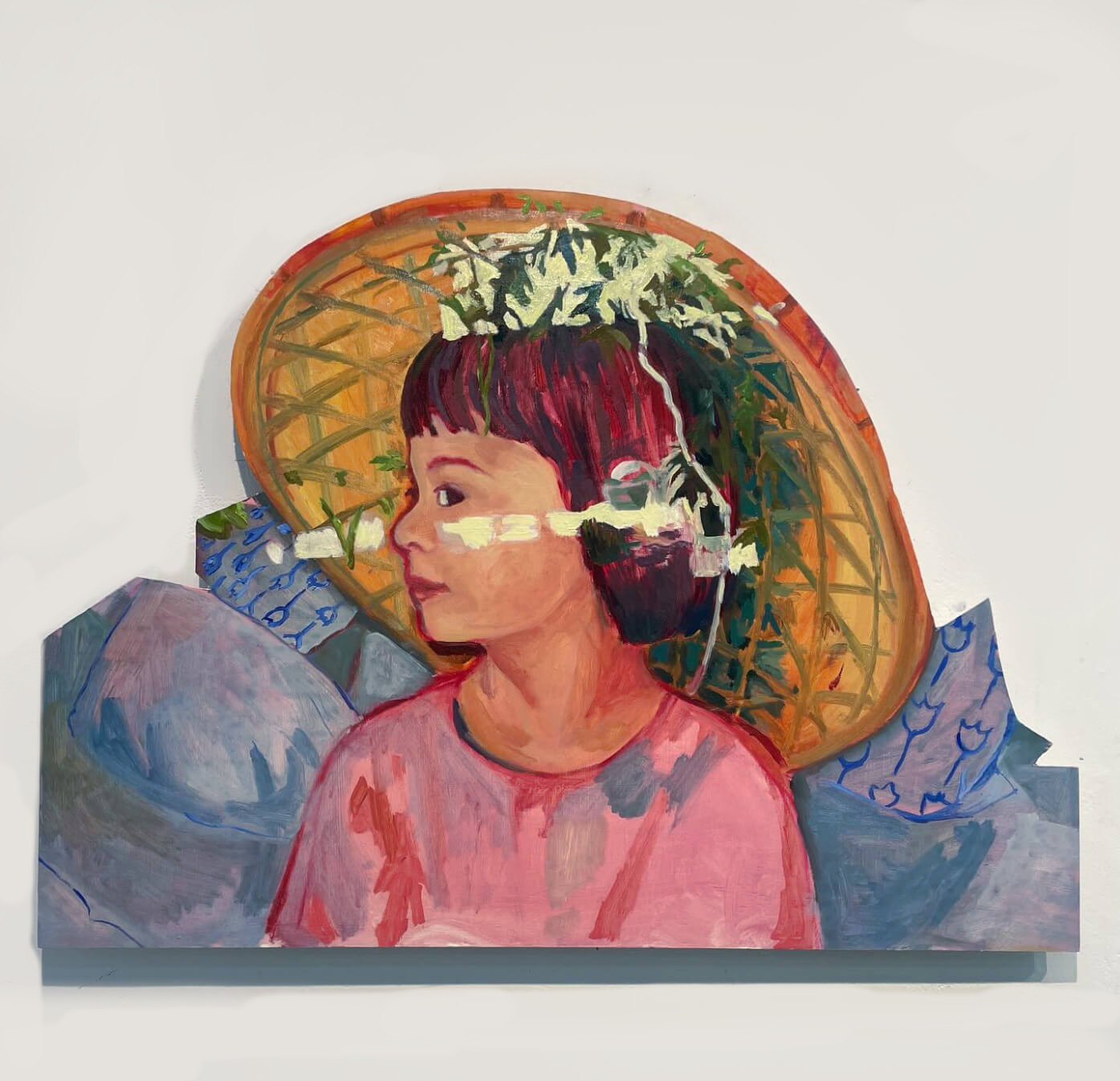
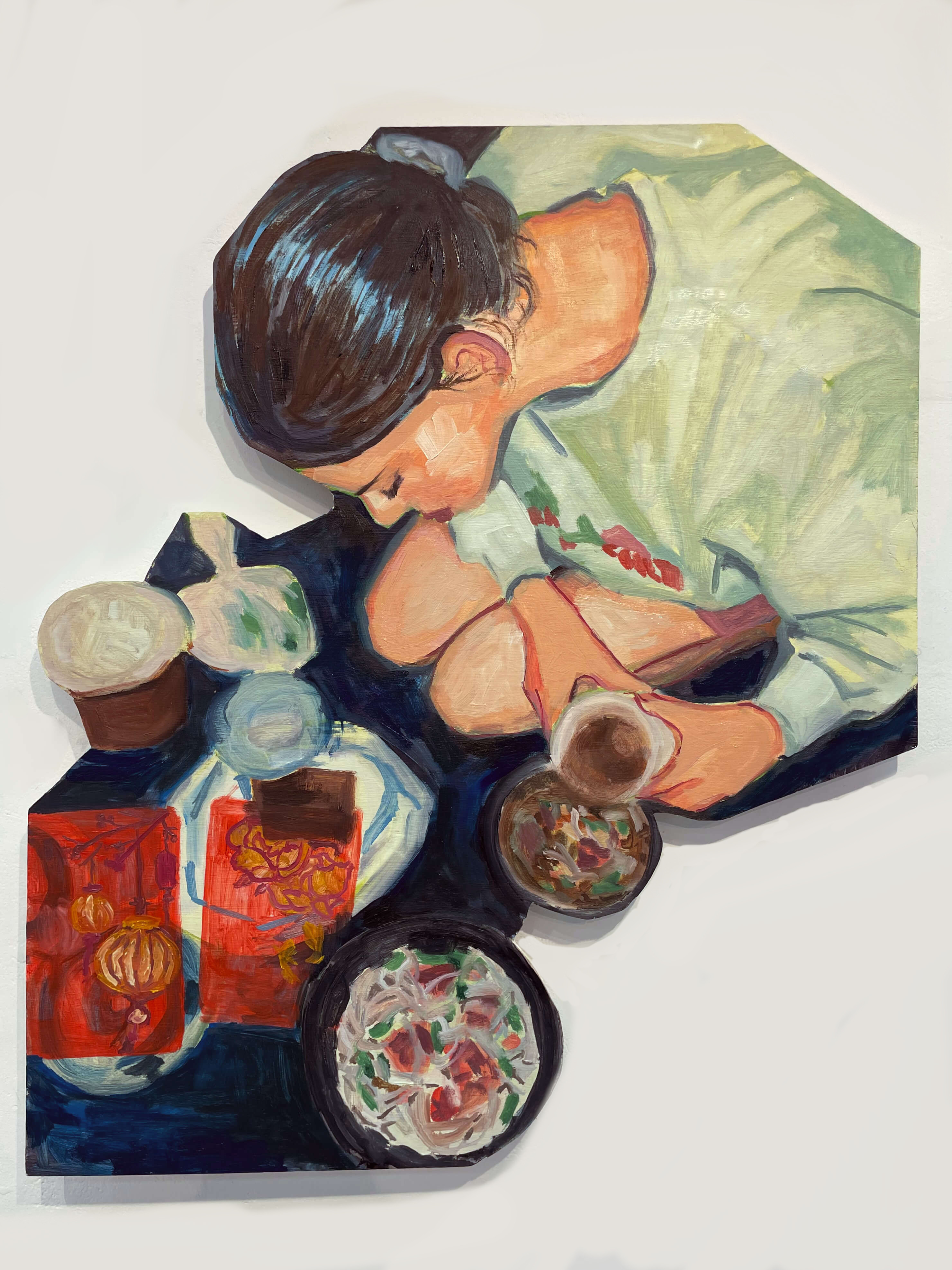
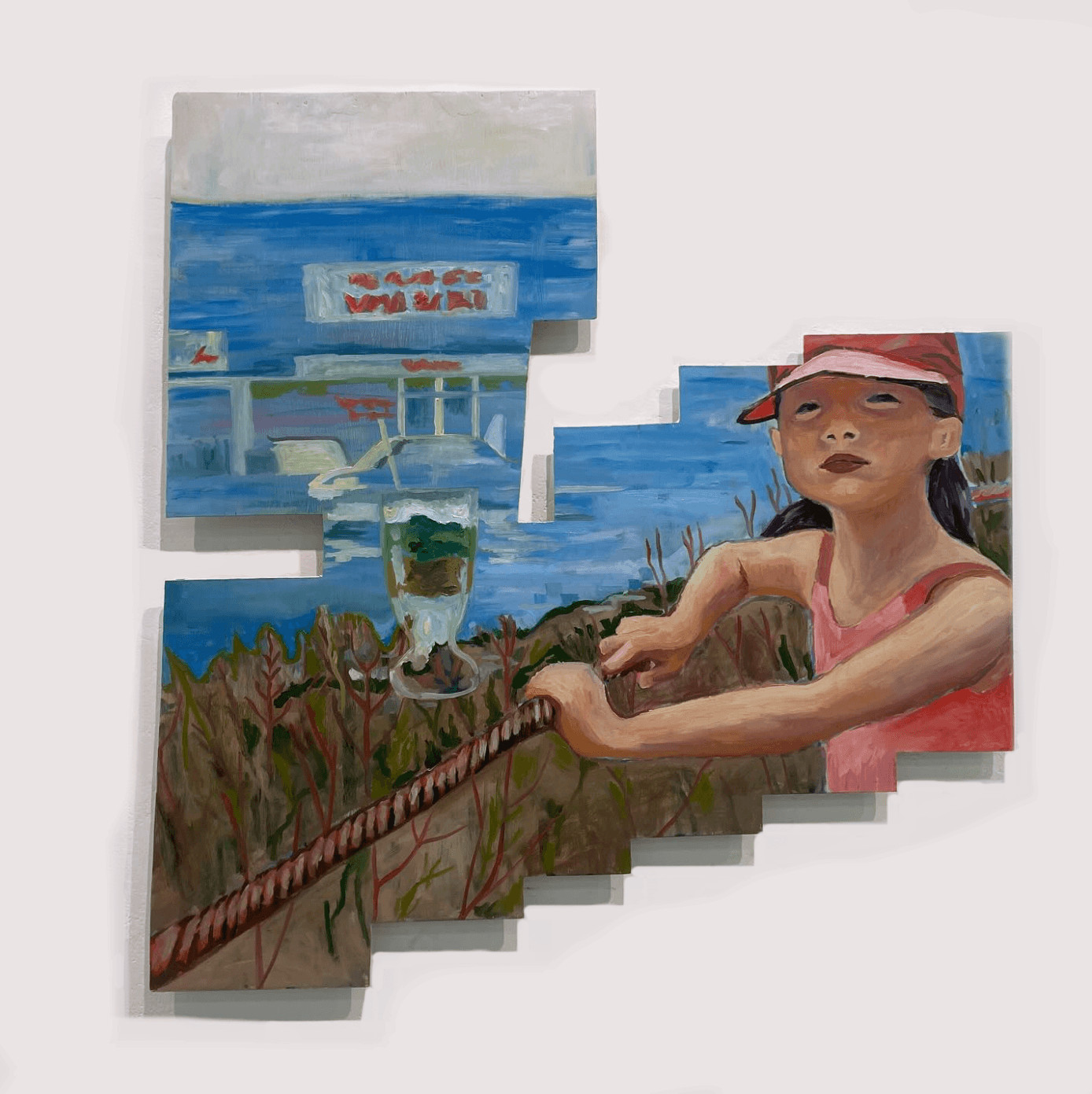
Oil on custom-cut birch plywood panels.
Kim, 30”x20.5”
Mai, 22.5”x30”
Anh, 30”x30”
This three part series works with the language of the “background” to explore my mixed-race identity and relationship to my family’s Vietnamese heritage, as it exists asymmetrically to our French heritage and largely North American upbringing.
Chapultepec Atmosferas (2026)
Single channel video filmed by Danya Leal Romero, edited in Premiere
Pro and After Effects by Chloe Kim Marchal.
This project was screened at Suoni Per Il Popolo Festival 2026.
Text by Danya Leal Romero.
What's In The Background? (2026)
Single channel video created in Premiere Pro, After Effects, HTML, CSS, Javascript
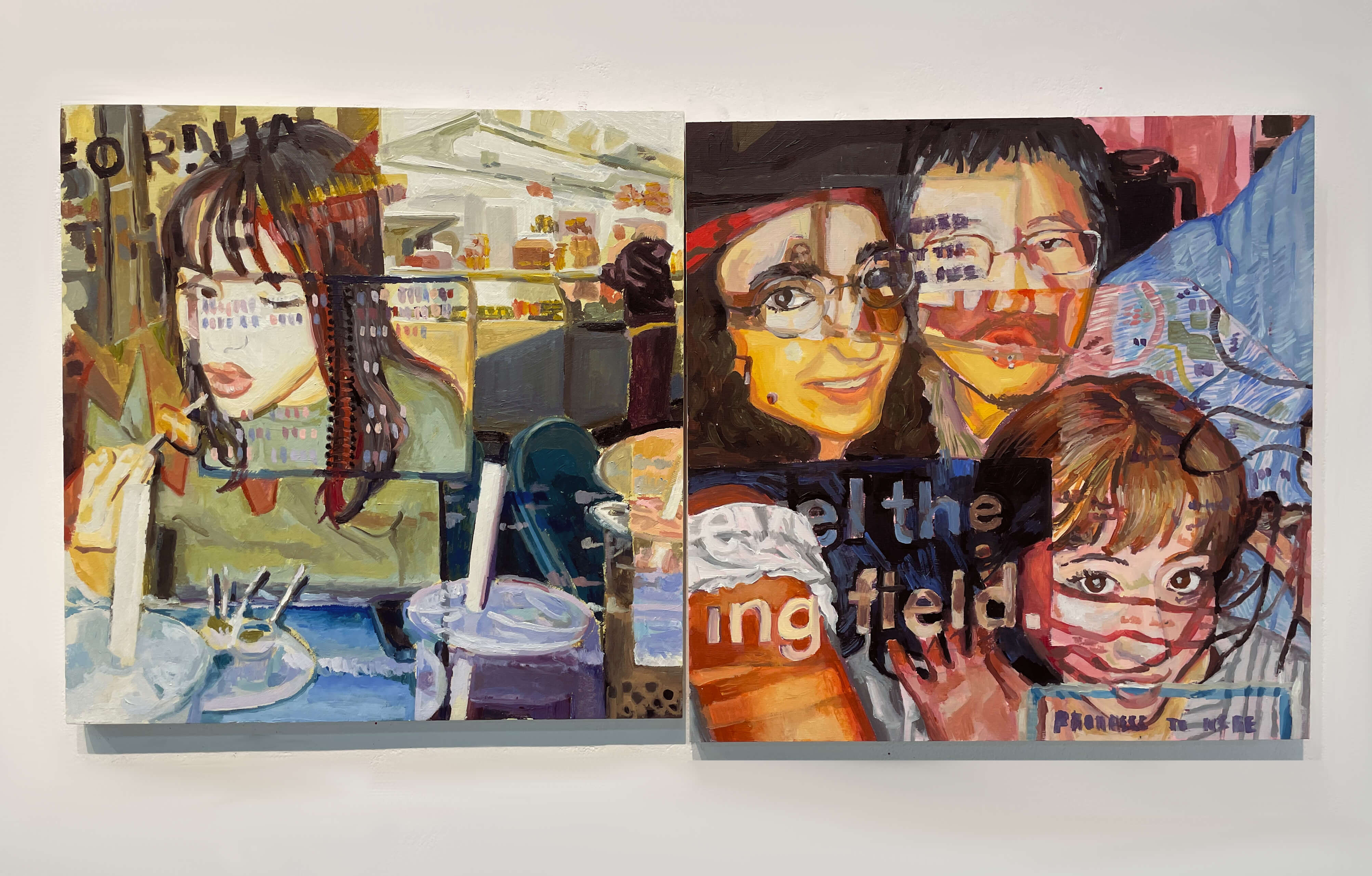
A video-diary-collage-reflection on language, culture, and tensions in the diaspora between a minority and its host country. An angst letter to the ways in which one language supersedes another in daily life, and the ways in which we bite our (mother) tongue.Here and There, Now and Then (2025)
Oil on wood panel, 20"x20"
1px = 30.6km/We Are This Far Apart"(2025)
Video documentation of web project built using HTML, CSS, Javascript and Media Pipe
Video documentation of web project "1px = 30.6km/We Are This Far Apart"(2025), inspired by Josh Worth's "If the Moon Were Only One Pixel". This creative coding project was made using HTML, CSS, JavaScript, and Google’s Media Pipe Solutions Hand Landmark model. The concept of this project is to represent large distances on a smaller, embodied scale, a reflection of how the body does not physically register the distance traveled via plane. Through online video calling platforms such as FaceTime, Discord, long distance relationships collapse into one screen. The project is a confrontation of the inconsistent internal sense of distance with numbers, which become slippery and wobblier the more you try to stabilize your hand.The DVD Cart (2025)
Single channel video created using Premiere Pro, After Effects,
Photoshop, HTML, CSS, Javascript and Avidemux.
Shown at the 2026 VAV Commencement Show at Concordia University.
The Home Page (2025)
Video documentation of web project built using HTML, CSS,
Javascript, Womp, Photoshop and footage edited in After Effects.
Presented as part of group exhibition at Deux Fois Mieux MTL pop-up,
"Growing Pains" curated by Laurianne Monnette and Jenn Amankrah.
Screen recording as video documention, site link to come.
Best of Both Worlds (2024)
Multichannel synced video installation and performance created using
Premiere Pro and After Effects.
This project was shown as part of Art Matters Festival and Nuit
Blanche 2025.
“Best of Both Worlds” is a multichannel video installation which plays on the Disney Channel show Hannah Montana to address my own biracial identity. The project serves as a playful approach to a traumatic subject: the cultural disconnect I experienced growing up, being alienated from my mother tongues and forced by my North American environment to prioritize understanding my peers rather than my family. Ultimately, the project concludes with the one lesson that Disney Channel has taught me: that the one true, universal culture is (American) cultural imperialism. The project reflects an older version of Disney Channel which had not yet adopted discourses of “representation” and “never forget who you are and where you’re from” rhetoric.