When thinking about this piece, I break it down into three types of
circulation: the circulation of capital and goods around the world
(“import, export”), the circulation of images via online networks (“poor
copies in motion”), and lastly, the circulation of myself around the
globe as my family moved to follow my dad’s job (“home”). Implicitly I
am always discussing a sense of home, whether that is site-specific, or
portable and seemingly divorced from geometric space. Home and memory
are inextricably linked, and what dictates our access to memory may by
extension also dictate our access to “home”. Format, location, and
maintenance are all important aspects of memory.
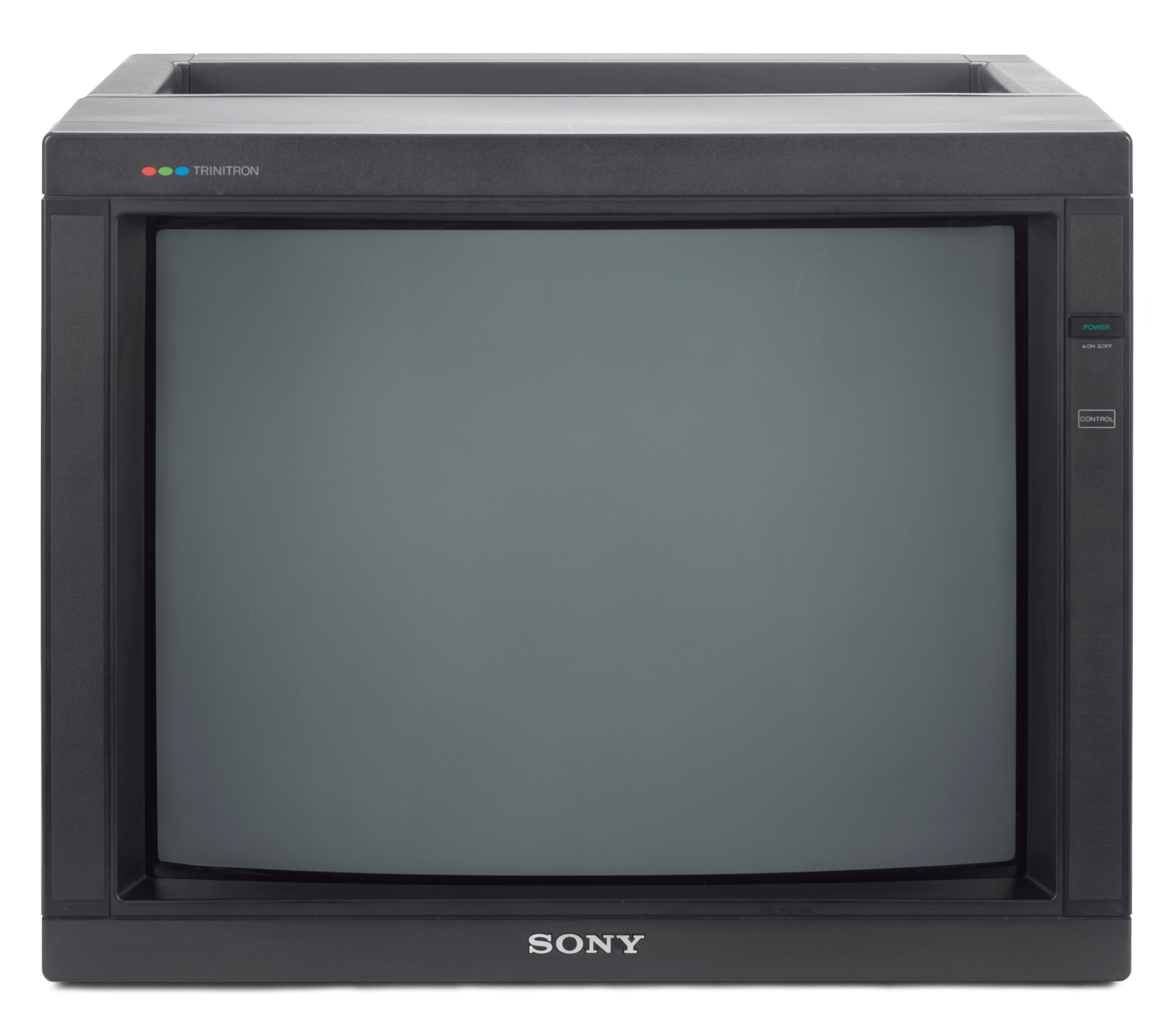
Almost more important than the content of the piece, is its
presentation: three CRTs stacked on top of a moving cart. With the
inclusion of a spotlight, the piece is meant to feel sculptural,
monumental, and singular – yet at any moment, the cart can be moved. The
fictional character may return to gather their things and keep moving.
The overall tone and atmosphere of this piece is one of dissociation:
dissociation from place, culture, time zone. For a journey to be as
frictionless as possible, places of transit must be clear, efficient,
and fit industrial standards. Cityscapes shift so rapidly and blend
together to the point where you cannot distinguish Paris from Los
Angeles, or Hong Kong from Toronto. There is a clear routine to
emigration: check in, go through security, line up at the gate, wait to
board. I was drawn to the aesthetics of airports, which are vast and
sterile, and how one might find a sense of home in sites of transit. The
visuals are overwhelmingly blue, black and white, registering as cold
and depersonalized. At the same time, there are subtle moments of
embodiment, through the presence of hands and fingertips, which compress
space and time with hand-tracking models. A glimpse of a familiar movie
DVD might ground you for a second. The double meaning of landmarks, on
the body and in the world, continues through the mapping of cities I’ve
lived in. Space is represented through lines and points, which are
forever shifting in scale. Despite the attempt to make sense of the
world through maps and numbers, these distances cannot be felt from an
airplane; the body does not register how far it travels. There is
cognitive dissonance.